Priming Your Brain For Classes
It’s the first day of a new quarter (and new year!), and classes are starting again. In order to prepare myself after a long break, I usually try to “prime my brain” by getting an overall idea of what each class is about and what applicable knowledge I bring into the class. “Priming” is a word from psychology, which is the idea that “exposure to one stimulus may influence a response to subsequent stimulus”. By researching class topics before you hear them in lecture, I believe you can greatly improve how much you understand during the quarter, which cuts down on study time. Since I’ve done this for the past 4 years, I’m codifying what this process looks like for future me, as it’ll be helpful in graduate school.
The main purpose of “priming my brain” is to make connections between concepts I already know and concepts I’ll encounter in the future. That way, I’m not caught off-guard when things get complicated in the later part of the quarter.
The main deliverable is a “roadmap” for what I’ll be learning. My Real Analysis class this past fall did a great job with this - the professor highlighted which key theorems we’d be proving and how they’re all related on the first day of class. The roadmap highlights 1. what topics I should already know, 2. what I will learn, and 3. what intuitions I need to build along the way. Keep in mind that this is mainly for STEM fields where classes and concepts tend to follow a strict progression, so I’m not sure how useful this advice is otherwise.
In case my future self is feeling lazy, a quick reminder of the benefits of this approach:
- Helps you catch holes in your knowledge/things you should already know before you begin the class
- As you’re creating the roadmap, you may come across proof techniques/lemmas that will be on the homework later.
- Since you know what’s coming up and how it fits into the bigger picture, you can “think ahead” during lecture rather than scrambling to make everything fit together.
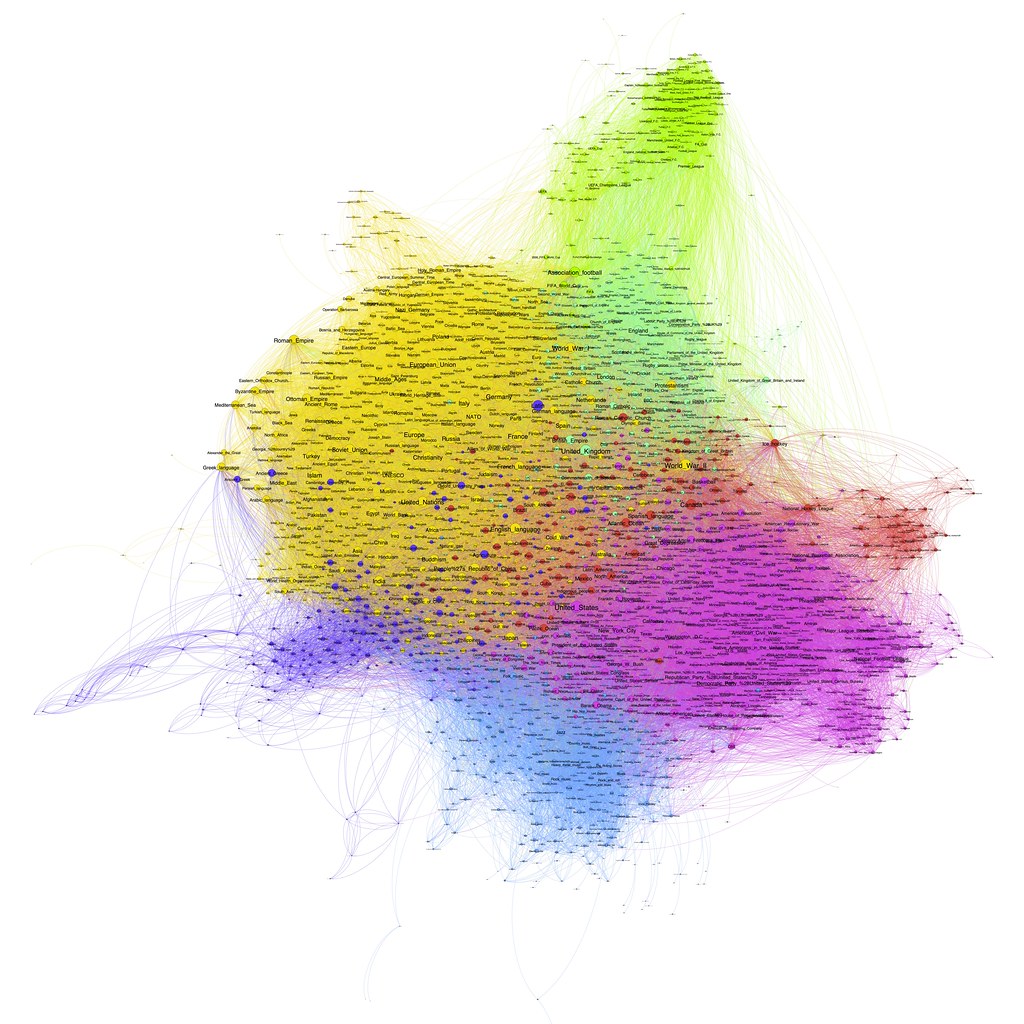
And a warning: the Forest of All Knowledge is an never-ending, ever-expanding fractal. Try to stick to a breadth-first search approach rather than a depth-first search. Your goal is to create a sketch that you can fill in as you take the class, not one really detailed portion. Basically, if you’re anything like me, limit the number of tangents you go on!
The Process:
- Gather resources. Some good places to look are your Canvas/class webpage and the textbook. If they’re lacking, you can usually find syllabi for similar classes at other universities with a quick online search.
- Create the document. Make a list of the main topics you’ll be covering, in order. Don’t worry if they don’t make a whole lot of sense!
- Review the basics. Every textbook usually contains a first chapter/appendix that highlights prerequisites. Make sure you feel comfortable with those first. This can look like a brief skim at your previous lecture notes, or doing a few relevant practice problems.
- Fill in the gaps. Define confusing terms in your class from the list of topics. Don’t feel like you have to use the most technical definition, just try to intuitively understand how it relates to the larger topic. You may need to go a few layers deep on definitions to get to something you understand. I usually just use a search engine, although I increasingly use ChatGPT (with manual double-checking, or using GPT-4 with citations). YouTube videos and blog posts are another way to make this information digestible.
- Make connections. Spot where concepts you learned previously come into play. For example, in my philosophy class, I’m learning about formal logical systems. Although this is my first philosophy class, I can connect my knowledge of mathematics (how to use quantifiers) and programming languages (syntax and semantics) to the topic. It’s helpful to explicitly write this out so the connection runs deeper than “oh, that seems familiar”.
Once you’ve completed this process, the roadmap doesn’t have to be something you look back on. The law of diminishing returns applies here too, you’ll probably learn extraneous and unnecessary information if you research for too long (an hour for each class usually works for me, longer if I need to review concepts from previous classes). This process ultimately prepares you to become a lifelong learner, as you discover self-learning resources and digest large concepts without having all the details.
Happy learning, and good luck on your classes!